
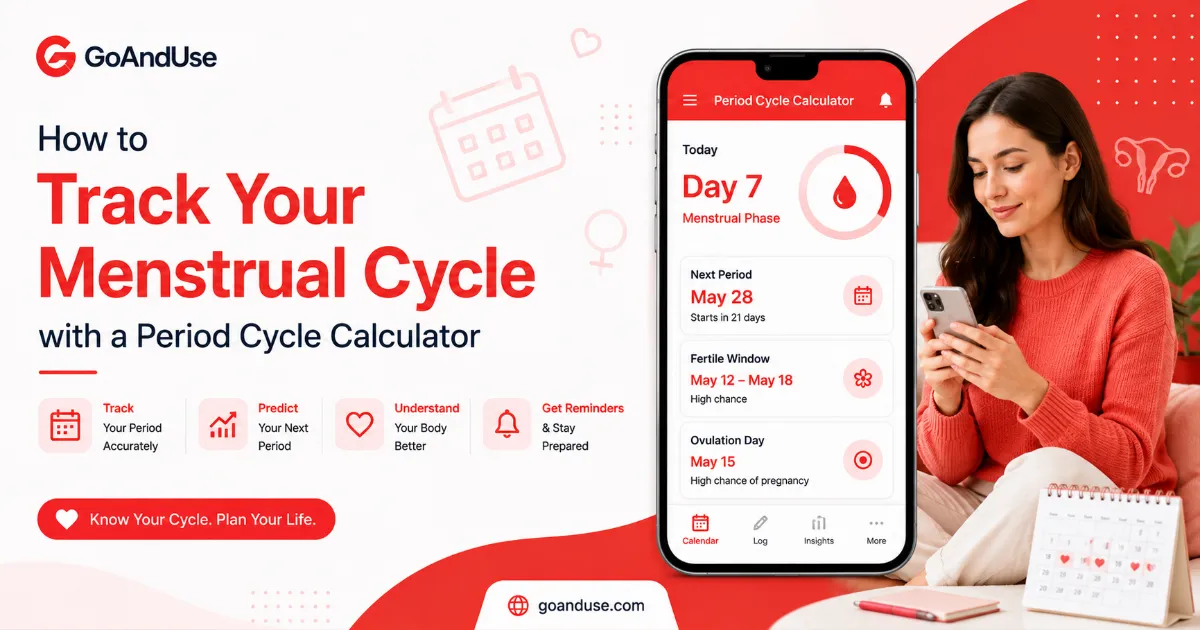
Every woman’s body runs on its own schedule. Some cycles are like clockwork — 28 days, every single month. Others shift by a few days depending on stress, sleep, diet, or lifestyle. That’s why learning how to track your menstrual cycle is one of the most important steps you can take for your overall health and awareness.
The good news? You don’t need to be a doctor or spend money on expensive apps to understand how to track your menstrual cycle effectively. A simple period cycle calculator can give you accurate insights — including your next period date, ovulation, and fertile window — all in under a minute.
What Is a Menstrual Cycle, Instantly?
The majority believes that the menstrual cycle is those days when one has period. However, that is just one part of a very big picture.
In fact, your period is a complete monthly process in which your body undergoes to get ready in case you get pregnant. It begins on the first day of your period and terminates on the day before your next period. The normal cycle is 28 days, however, 21-35 days is quite normal.
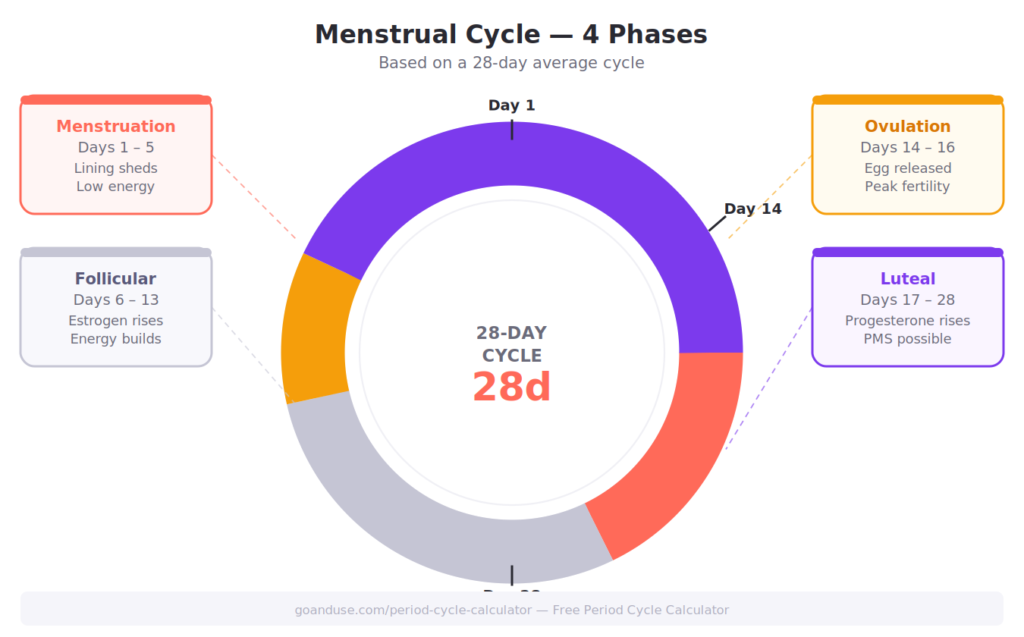
There are four principal phases of the cycle:
1. Menstruation (Days 1-5) This is the most commonly known phase of the period as a uterine lining is shed causing one to bleed. Energy is generally lower and most women feel cramped or uncomfortable during this period.
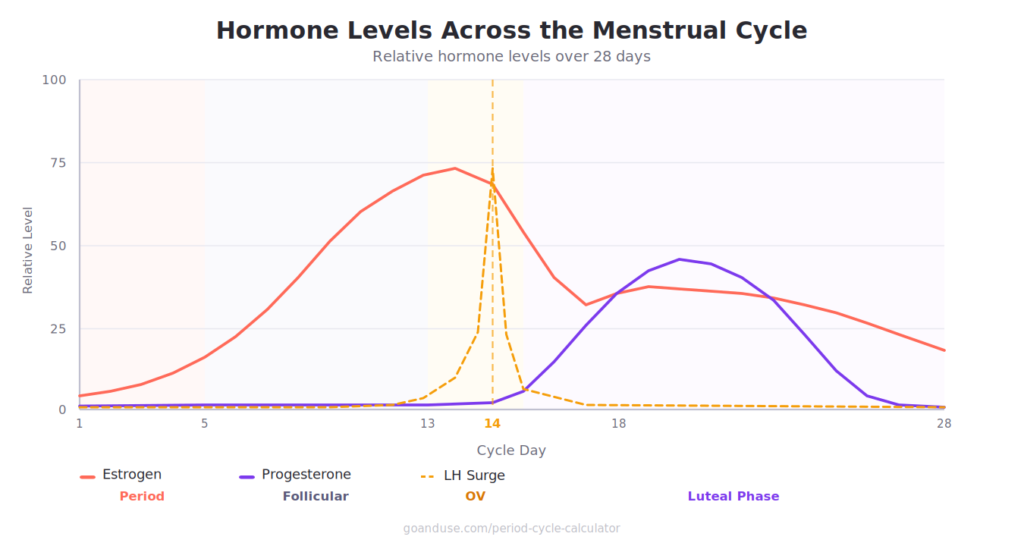
2. Follicular Phase (Day 13 to 1) This phase literally extends beyond the period of menstruation. Estrogen is essential to the rebuilding of uterine lining and starts being produced by your body. Towards the end of this stage, energy begins to increase.
3. Ovulation (Around Day 14) It is the party of the first part. The ovary of your body produces a mature egg that is passed through the fallopian tube. Its egg life is no more than 12 to 24 hours, though since the sperm could live as long as 5 days within the body, your most fertile time is the one surrounding ovulation.
4. Luteal Phase (Days 15-28) DAYS 15-28, progesterone is now secreted by your body in preparation of a possible pregnancy. In case of lack of fertilization, the levels of hormones decrease, and your period starts all over again. It is also at this time that symptoms of the PMS are likely to manifest.
Why Tracking Your Menstrual Cycle Matters
A lot of women only pay attention to their cycle when something feels off — a late period, unexpected cramping, or unusual symptoms. But tracking your cycle regularly gives you far more than just a heads-up on your next period.
Here is what consistent cycle tracking actually helps with:
Understanding your body. When you track your cycle over a few months, patterns start to emerge. You might notice that you always feel more anxious in the days before your period, or that your energy peaks right around ovulation. This kind of self-awareness is genuinely valuable.
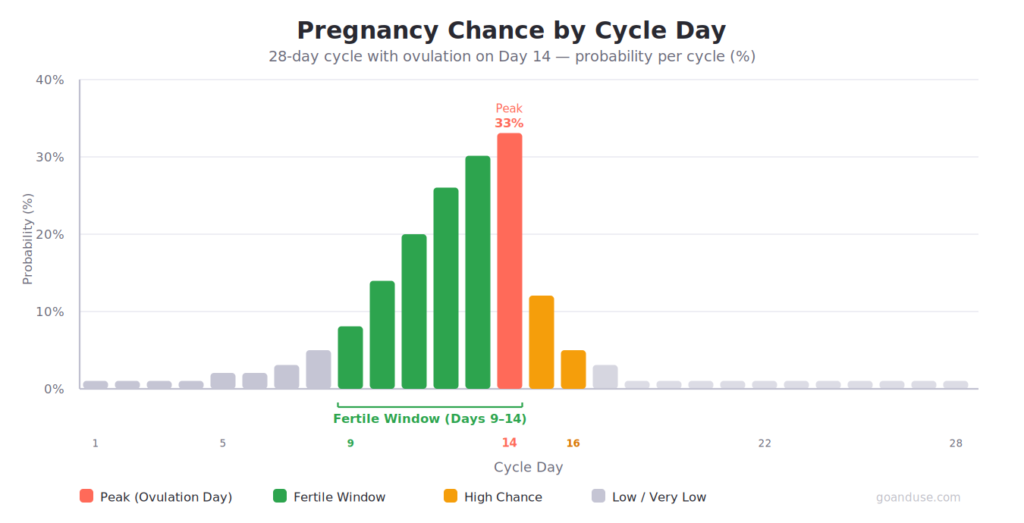
Family planning. Whether you are trying to conceive or trying to avoid pregnancy, knowing your fertile window is critical. The five days before ovulation plus ovulation day itself are your highest-chance days. A period cycle calculator pinpoints these dates for you automatically.
Spotting irregularities early. Sudden changes in your cycle — like periods becoming much heavier, much shorter, or disappearing for months — can be early signs of conditions like PCOS, thyroid issues, or endometriosis. The earlier you notice these shifts, the earlier you can speak to a doctor.
Managing PMS symptoms. When you know your luteal phase is coming, you can plan for it. Extra rest, magnesium supplements, reducing caffeine — small adjustments that are much easier to make when you know they are coming.
How to Track Your Menstrual Cycle Step by Step
The monitoring of your cycle does not demand any complex things. Here is how to do it properly:
Step 1: Circle the first day of your period Every period is marked by a date. Recording these dates is important. This is Day 1 of your new cycle. This is one piece of information upon which everything rests.
Step 2: Count cycle length Count the number of days between first day of one period and first day of next period. Assuming that you began your period on the 1 st of March, and the next period on the 29 th of March, your cycle length will be 28 days.
Step 3: Monitor your period time Get the number of days your period takes. The majority of the periods take 3-7 days. This will assist in creating a more realistic account of your cycle with time.
Step 4: Enter a period cycle calculator With your final period date and average cycle length, enter both of these into a period cycle calculator. In a few seconds you have the predicted next period date, ovulation window, fertile days and an indicator of the possibility of pregnancy, without having to do the calculations yourself.
Step 5: Track at least 3 months Three months of data will provide you with a snapshot. Three months will furnish you with a trend. The more the data you possess the better will be your predictions.
What a Period Cycle Calculator Tells You
A good period cycle calculator does more than just tell you when your next period is coming. Here is a breakdown of what each result actually means:
Next Period Date This is your predicted start date based on your cycle length. It will not always be perfectly exact — cycles naturally vary by a day or two — but it gives you a reliable window to prepare.
Ovulation Date Calculated by counting back your luteal phase length from your next expected period. For most women with a 14-day luteal phase, ovulation falls roughly in the middle of the cycle.
Fertile Window The six days ending on ovulation day. This is when conception is possible. If you are actively trying to get pregnant, these are the days to focus on. If you are avoiding pregnancy, these are the days to be most cautious.
Pregnancy Chance Indicator This shows how likely conception is based on where you are in your cycle right now. On ovulation day, the chance is at its peak. In the days just before, it remains high. Outside the fertile window, the likelihood drops significantly.
Free Online Tool
Period Cycle Calculator
Enter your Details
Try the Free Calculator →No sign-up required · 100% free · Instant results
Common Questions About Menstrual Cycle Tracking
My cycle is not 28 days. Is something wrong?
Not at all. The 28-day average gets mentioned so often that many women assume it is the standard. In reality, cycles between 21 and 35 days are all within the normal range. What matters more than the exact length is consistency — if your cycle varies by more than 7 to 10 days from month to month, it may be worth mentioning to your doctor.
Can stress affect my cycle?
es, significantly. Physical or emotional stress can cause your brain to alter the hormones that regulate ovulation. This can delay your period, shorten your cycle, or even cause a missed period entirely. It is one of the most common reasons cycles suddenly become irregular.
Is a period cycle calculator the same as a fertility tracker?
They overlap quite a bit. A period cycle calculator gives you key dates based on your cycle data. A full fertility tracker may also incorporate basal body temperature, cervical mucus observations, and other physical signs. For most women, a period cycle calculator provides everything needed for general cycle awareness.
How accurate are these predictions?
Predictions are based on your average cycle length and are most accurate when your cycle is regular. The further you are from your average, the more the predictions may shift. Think of the dates as a reliable estimate, not an exact guarantee.
Start Tracking Today
The hardest part of tracking your menstrual cycle is simply getting started. Most women who begin tracking wish they had done it sooner — not because anything was wrong, but because understanding their own body changed the way they take care of it.
You do not need to track every symptom or sign. Start with the basics: your period start date, your cycle length, and a free period cycle calculator to do the rest. Within a few months, you will have a clear, personalized picture of your cycle that no generic health chart can give you.
Use our free Period Cycle Calculator above to get your full cycle report — including your next period date, ovulation day, fertile window, and a downloadable PDF — in seconds.
Free Online Tool
See How Your Money Grows Over Time
Enter your principal, interest rate, and time period to instantly calculate how compound interest builds your savings — with a full year-by-year breakdown.
Try the Free Calculator →No sign-up required · 100% free · Instant results